

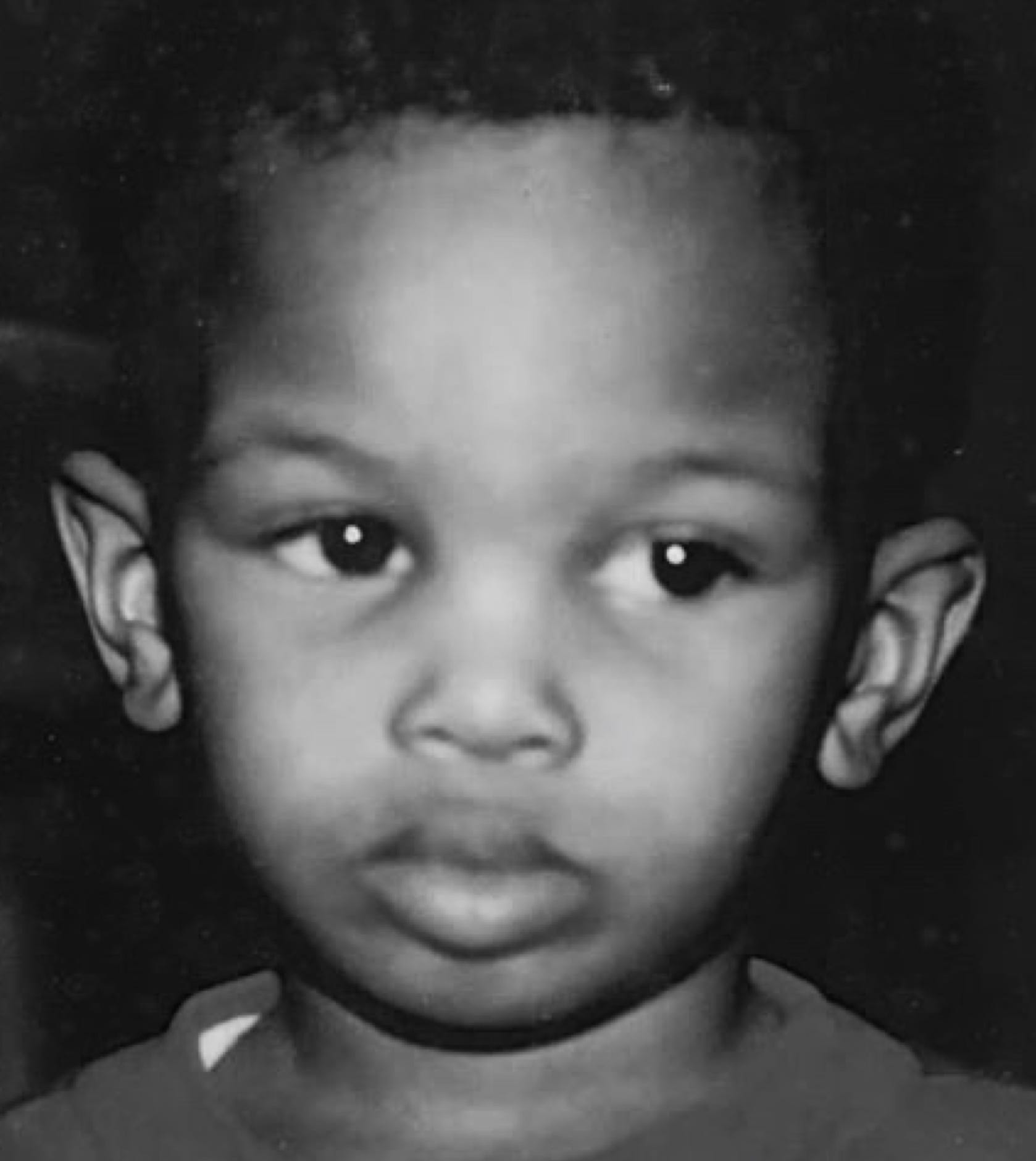
When I got to Lafayette Elementary in West Oakland, I was ten years old with an accent that was part Chicago and part Kentucky twang. By then I’d been through more schools than I could keep straight. Eleven elementary schools, all told. My parents were fighting addiction and in and out of jail, and we bounced between my aunties’ houses and a shelter. Around new kids, I stuttered a little. I didn’t know how long I’d be staying, so I kept to myself.
The school had me slated for special education.
Then came Read Out Loud Day. I stood up, shoulders back, and I read that page better than anybody in the room. I could do that because of a tiny elementary school in Paducah, Kentucky, one of the eleven, that made us master reading. Getting through it wasn’t enough there. We had to master it. By the end of that week, I was in the GATE program, and I stayed on the higher track all the way through high school. I wanted to be smart. I wanted to be the smartest. I enjoyed being challenged academically.
One day and one page changed where my whole life was headed. I think about that a lot. I thought about it more than usual this month.
What the A doesn’t tell you
On September 13, the New York Post and the California Post ran a front-page story on grade inflation in California, and I was quoted in it. They came to me as an education advocate who came up through California high schools, graduated in 2001 with top marks, and still ended up in remedial classes at Cal State. I told them grade inflation has been building for decades and keeps getting worse. I told them my high school classes were fairly easy for me and didn’t take a lot. I’m grateful for those grades, because they got me into college, but the level of preparation was a huge letdown. And I told them what I see in students now: a lot of them are multiple grade levels behind, but they have the confidence of, “Hey man, I just graduated with a 3.0. I’m about to go to college.”
The numbers in that piece are worth sitting with. The number of students applying to the University of California with a 4.0 or higher roughly doubled in ten years, from 52,989 in 2015 to 103,138 for the class of 2025. Over that same stretch, state test scores in reading and math slid.
UC San Diego’s own faculty report found a nearly thirtyfold jump between 2020 and 2025 in incoming freshmen whose math tested below high school level, and 70 percent of those students were below middle school level. More than 1,200 UC faculty signed an open letter asking the system to bring back testing, because professors are reteaching middle school math to college freshmen. Only 30.5 percent of California 11th graders met the state math standard last year, while more students than ever walk across the graduation stage.
COVID made all of this worse, but it didn’t start it. This has been building for decades.
On September 20, The New York Times Magazine published a long essay by Nikole Hannah-Jones, “In Fighting for Every Black Child, Did I Betray My Own?” Ten years ago, she wrote “Choosing a School for My Daughter in a Segregated City” about enrolling her young daughter, Najya, in a segregated, high-poverty, mostly Black school in Brooklyn. She argued then that families with resources owe something to the collective, and that when they leave, they help keep those schools separate and unequal. The new piece is her ten-year reckoning, and it is a hard read.
Year after year, her daughter brought home good grades without really being taught. Work went unchecked. There was a stretch with no homework at all. She earned A’s in math and then struggled badly once she reached a more demanding high school. When the family had her assessed at a tutoring center, she had gaps going back to long division and fractions. Hannah-Jones writes that she apologized to her daughter. Her daughter told her she wished her mother had thought about her as much as she thought about other people’s children.
That’s the line everyone is passing around. It stayed with me too.
One story is a statewide spreadsheet and the other is a portrait of one family. Both describe the same distance: the space between the grade on the paper and what a child actually knows.
First, some respect
I’ve disagreed with Nikole Hannah-Jones for years, and some of her supporters have said things about people like me that I didn’t appreciate. I won’t pretend otherwise. But I respect her. She’s a gifted writer, she’ll be studied long after both of us are gone, and I own more than one copy of her book. I believe her heart has always been set on the freedom of Black people. We just see different roads to get there.
Her daughter and her husband never signed up to be anybody’s talking point, and I won’t treat them like one. If you came here for a pile-on, this isn’t that.
I’m also not writing for the people who want to use her essay, or my quote in the Post, as cover to say our kids don’t want to learn. Like I said, I wanted to be the smartest kid in the room. Most of the Black children I’ve worked with want the same thing. They need the truth about where they stand.
The safety net
Here’s what I keep coming back to. Her daughter is going to be fine. Her family can afford tutoring, testing, therapy, and a network that opens just about any door a young person wants to walk through. When the experiment stopped working, they could end it. I’m glad they could. Every parent should have that option.
But a lot of parents read the 2016 piece and heard an instruction. Back then she said in an interview on NPR that she knew enough about the research to know her daughter would be fine. She said it with the confidence of fact. It turned out to be a hypothesis.
I’ve sat in school board meetings and watched mothers break down crying, because someone told them that choosing a different school was abandoning their community. That meant a charter, or a stronger district school across town, or a private school with a voucher. Often the person telling them this sent their own kids to the school at the top of the hill. Many of those parents didn’t have much money. They had one small opening for their child, and they were made to feel guilty for taking it.
Those parents don’t have her safety net. When the grades lie to their child, nobody pays for a private evaluation. Nobody is there to catch the kid.
I know what that looks like, because I watched it happen to my friends.
One of my boys in middle school hit his growth spurt early and looked like a varsity lineman at thirteen. His mama kept him fly. Everybody loved him. PE was the best part of our day; I was hooping, and he’d be holding court clowning cats, and every now and then we’d all catch a movie together at the historic Grand Lake Theatre. He had the swagger of a young Deion Sanders and the fire of a young Ice Cube. He could have been a community leader or a legendary comedian.
Then one day in English class, the teacher told him to read from chapter three. He couldn’t get through a sentence.
After that, he came to class less. Then he mostly wasn’t at school. Then he was grindin’, and the clothes got nicer, and nobody at home asked many questions, because his mom was surviving the same things all our families were surviving. He got shot. His mama had to bury her baby.
He wasn’t the only one. I’ve lost too many of the friends I grew up with. When I trace it back, most of them couldn’t read well, and the adults around them let it slide. I have multiple stories like this I can share. There’s a clip of mine that got a lot of attention where I talk about a different friend from college.


[Adult language in the video]
Where I come from, those boys become legends in death. The ten-year-old watching decides that at least that road gets you remembered. We turn our dead children into martyrs because it’s the only way to carry the grief, and then we call the kid who goes to college white. For Hannah-Jones’s daughter, a lying report card meant some very hard years at a demanding school. For a lot of the kids I grew up with, it cost everything.
The grades lied to me too
Even the GATE track wasn’t mastery. I graduated from high school in 2001 with strong grades and got to Cal State Hayward, now East Bay, where I was placed in remedial English and remedial math. I told the Post as much. I took three quarters of each, for no credit, on top of a full 16-unit load. Call it 24 units. At the same time, I worked 30 hours a week selling shoes at Bayfair Mall in San Leandro and held a work-study job at the library, doing homework between pulling microfiche for professors.
That’s what it cost me to earn a degree I’d been told I was already prepared for. I paid for it, and I was one of the lucky ones.
I also learned that money alone doesn’t fix a school. That was clear early in my career, and for the record, I’ve been doing this professionally for twenty years now. I’ve worked in and alongside schools my whole career, good ones included, and nearly all of them run a teacher lottery. Draw one teacher and your child is fine, because that teacher knows the content cold and knows how to get it into a kid’s head. Next door is a teacher who will tell a child, I get paid whether you learn or not. Most Black educators I know have heard some version of that sentence.
I had Mr. Brown in middle school. He didn’t stop at the Pythagorean theorem. He showed us where math came from, connected it to Kemet, and connected Kemet to us. He told us he was about to make us bilingual, or trilingual for the kids who already spoke two languages, because math is the language of the universe. For every Mr. Brown or Coach Bodipo I had, there were many more teachers who either didn’t care or weren’t good at the job. For the kid in the seat, it came out the same either way.
And there are predominantly Black schools out there getting it right. I produce the Leader to Leader podcast with Charter School Growth Fund specifically to talk with leaders of schools that are delivering. We cover a bevy of diverse schools, including Black schools led by Black leaders. No school is perfect, but the ones we feature are damn good, and more importantly, parents choose them every day, often after pushing through pressure from both the left and the right. We have to stop treating Blackness as another word for struggle.
I may not know a ton about the school Hannah-Jones chose for her child, but there are TONS of Black schools in this country, traditional public and charter alike, that are immaculate. Let me say it again with my full chest: there are Black schools across this country where academic proficiency and Black culture aren’t a Sophie’s Choice, where parents don’t have to stare down Mephisto like Faust just so their kid can have a good future. Parents, and to a degree students, still have a role to play in that. That role is agency.
What the research says
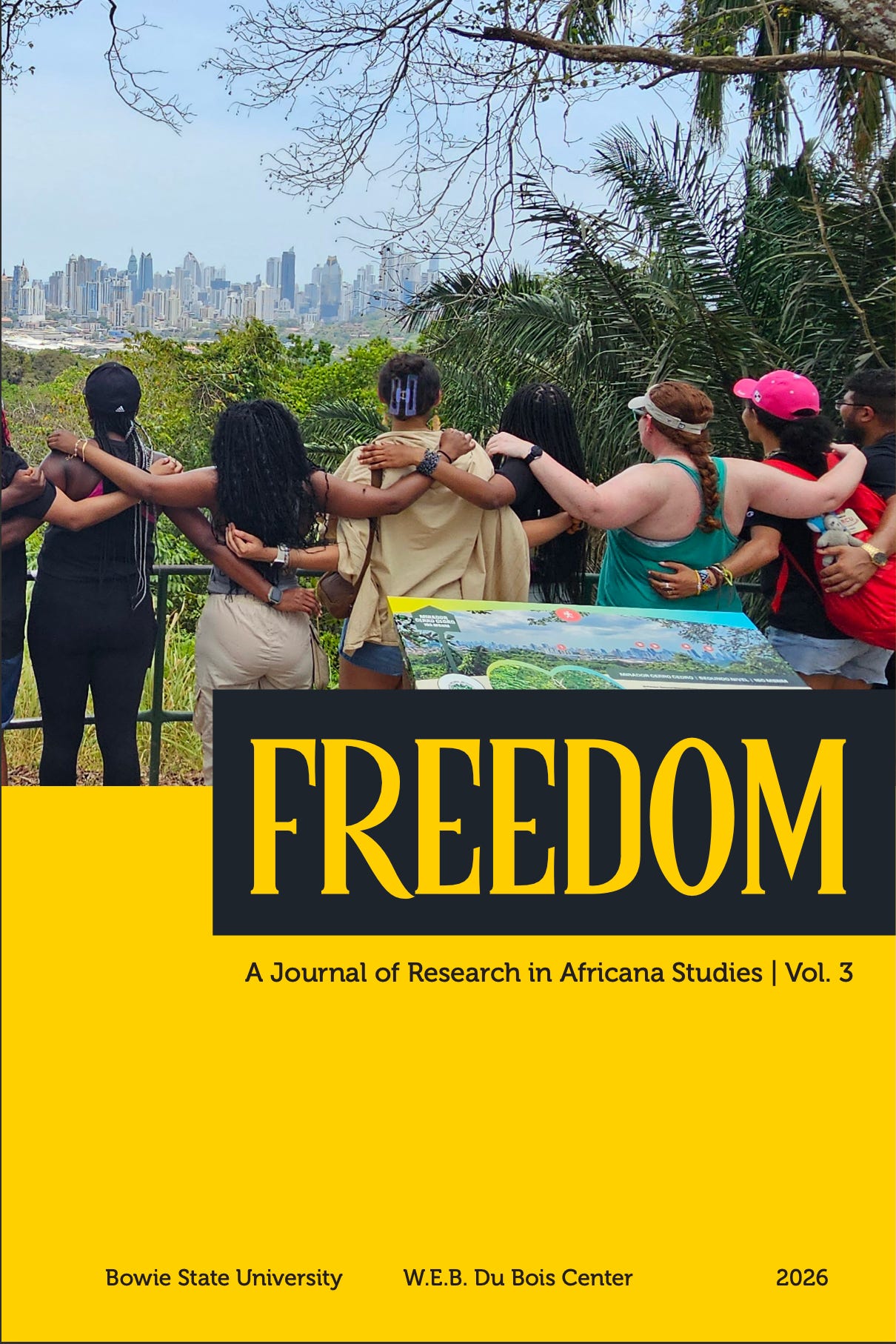
This is where my own research comes in. My article “Empowering Agency Over Grit,” forthcoming this fall in Freedom: A Journal of Research in Africana Studies Vol. 3 from the W.E.B. Du Bois Center at Bowie State University, studies three Black men who grew up in poverty during the crack epidemic and went on to earn doctorates.
The usual story about men like them is grit: they pushed harder than everyone else. The evidence for grit is a lot thinner than its popularity suggests. When you listen closely to these men, you hear something else. They knew where they actually stood. They learned how the system worked and moved through it on purpose, with people who helped them along the way. And they carried a sense of responsibility to the people coming up behind them.
That’s the A.N.D. model: Awareness, Navigation, and Duty. Grit asks kids to carry weight the system should be carrying. Agency gives kids and their families the tools to see what’s happening and do something about it. And when young people do succeed on grit alone, pushing through trauma that no one ever addresses, there’s a price. I call it the Black Achievement Trauma Tax.
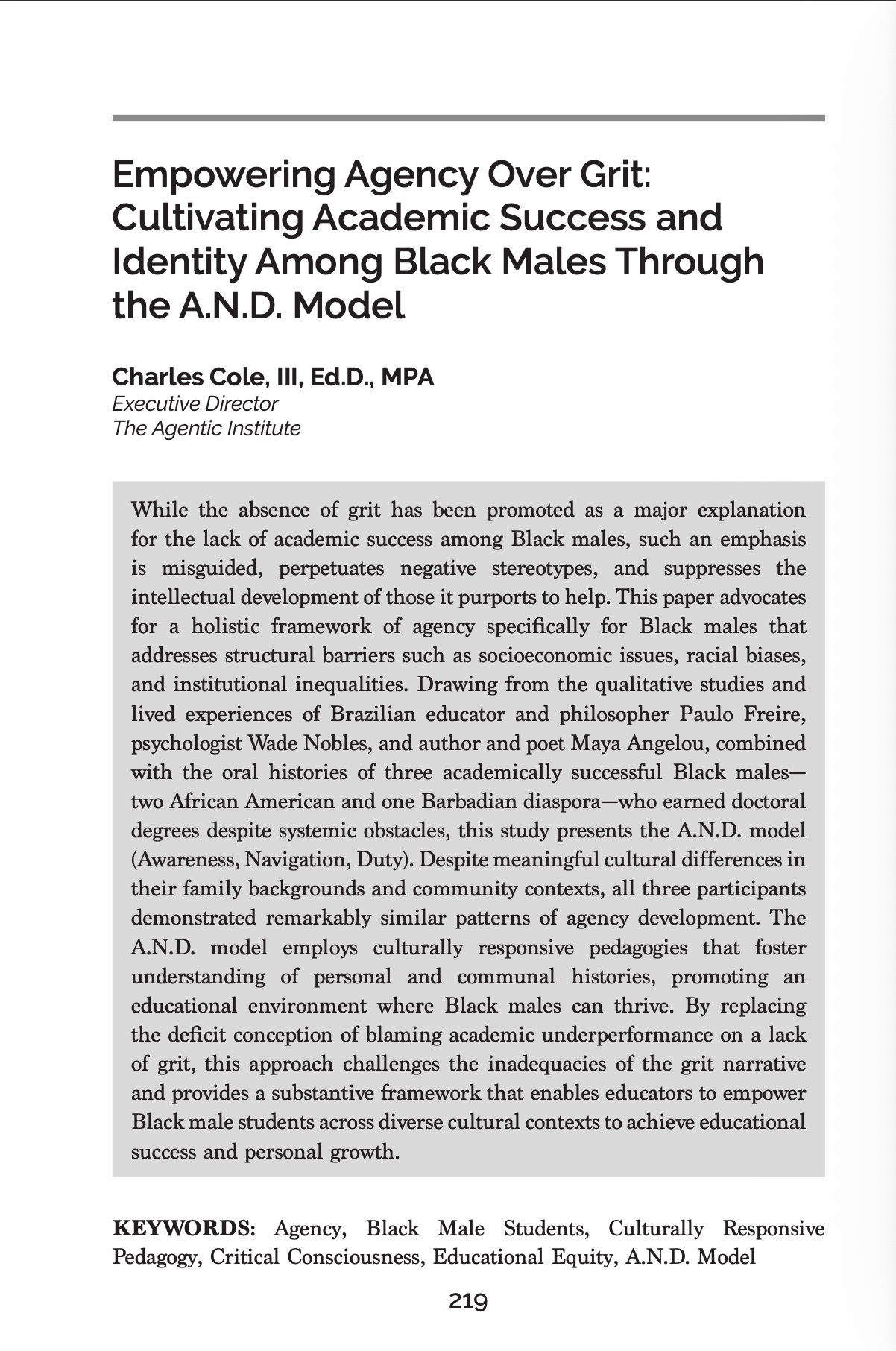
Awareness comes first, and it’s exactly what both of this month’s stories are about. At The Agentic Institute | Energy Convertors, we worked with more than 500 high-achieving Oakland students. Eight in ten believed they were reading at grade level. The data put the real number closer to three in ten. These are the kids with the good grades. They aren’t lazy, and they aren’t lying to themselves. Somebody told them they were fine.
A child can’t navigate a gap nobody told her about. Hannah-Jones’s daughter found out at a tutoring center. My friend found out in front of his whole English class. I found out from a college placement exam. There has to be an earlier way to find out, and a kinder one.
What I’m asking of parents and students
Parents, I truly don’t care which school you choose. If you love your neighborhood school and your family has history there, send your child and be in that building, because you’re going to have to be. If you choose a charter you like, same thing. If you have a little money or a voucher and choose private, same thing, and on top of that you’ll need to be the one who makes sure your child knows who they are culturally.
Your job doesn’t change with the building. Check the homework, even if you don’t know the material yourself. Then ask questions. What should my child know by the end of this year? What does mastery look like? What does this A actually mean? How are you grading? Get to know the teacher and the principal. Make friends inside that building. We’re past the days when you could drop a child off and expect a finished product to come out the other end.
Students, you have a right to know where you really stand. Ask for your test scores, not only your grades. If the two don’t match, ask why.
Don’t trust me blindly either
Read her essay. She’s a great writer, and it’s an honest piece. Read the Post story. Read my article when it comes out this fall. Then check all of it, including what I’ve written here. Read me with some skepticism. I don’t want fans, and I don’t want to be anybody’s overlord. I want families who can listen to Nikole Hannah-Jones, listen to Dr. Cole, look at the data for themselves, and then make the call for their own child, even when that means telling all of us we’re wrong.
That’s what agency is. For the families who never had a safety net, it’s the closest thing to one.
Keep writing, sister. I mean that, and I hope the next book is even bigger. I just want the families who trust you, and the ones who trust me, to be able to decide for themselves.
P.S. We’re getting into all of this at our Agentic Fireside Salon, “The Awareness Gap,” on Thursday, September 24 at 6:00 PM CT with Kareem Weaver and Debbie Veney. Register here.
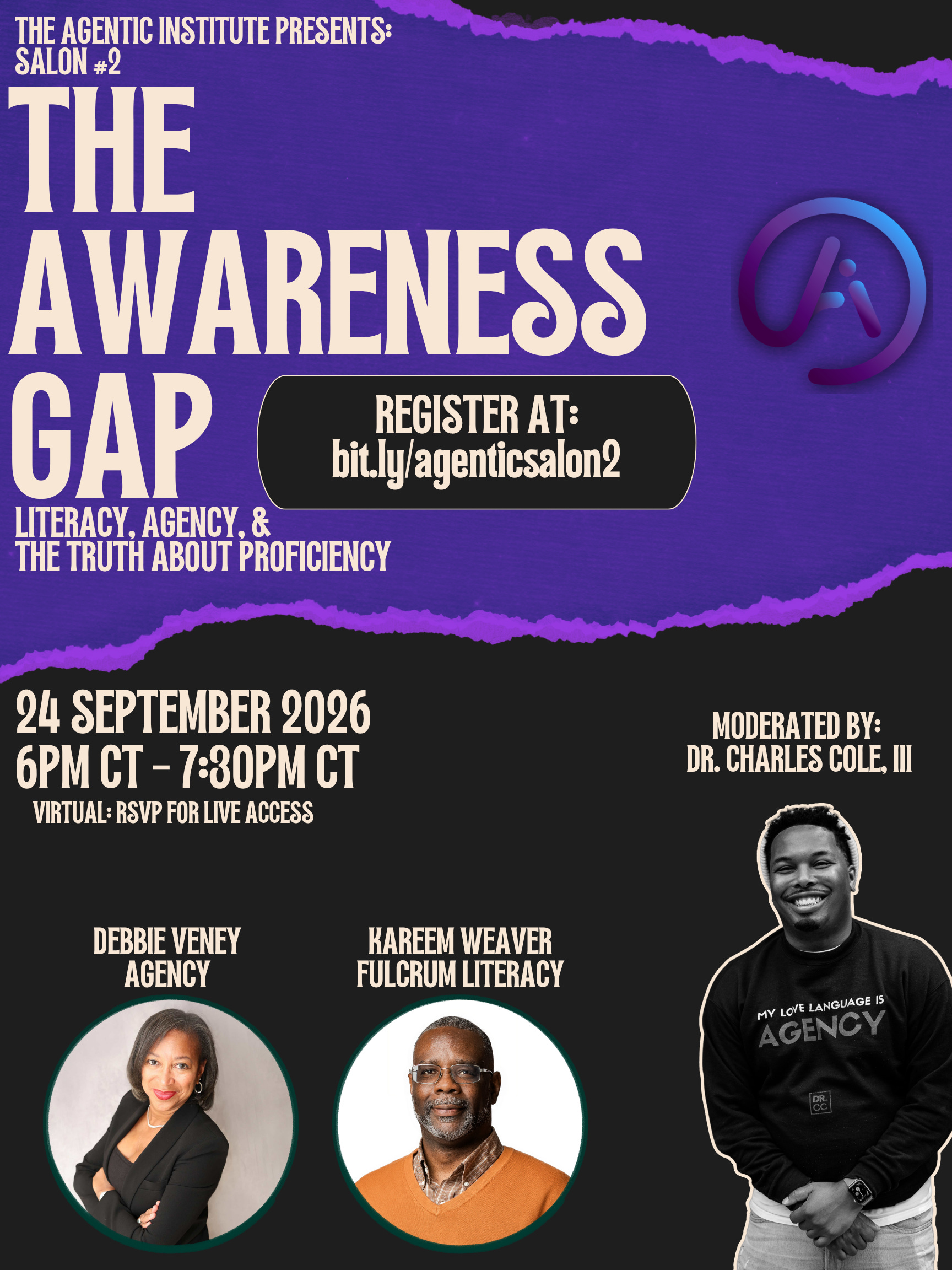
Dr. Charles Cole, III is the founder and executive director of The Agentic Institute, an Oakland-based education nonprofit working in more than 20 states. Its work is built on the A.N.D. Framework: Awareness, Navigation, and Duty. He is the author of Beyond Grit and Resilience, hosts the podcasts Color Commentary and The South Star Classroom, and co-founded 8 Black Hands.
Dr. Cole, your story is powerful. Thank you for continuing to push us to think differently about literacy, access, and what our children deserve.